
Product · Shipped core
Green Fuel Plant Builder
Design sustainable fuel plants end to end. Every change propagates across technical, economic, environmental, regulatory, and financial planning domains, no manual re-entry.
Shipped, in use with pilot partners
The problem
Why this exists
The process flow diagram, the financial model, the LCA, and the compliance report live in separate systems with no shared source of truth.
Every change to the plant means re-entering the same numbers in every tool, by hand, again.
Plant Builder makes the flowsheet a living data model instead of a drawing, so one update reaches every planning domain automatically.
What it does
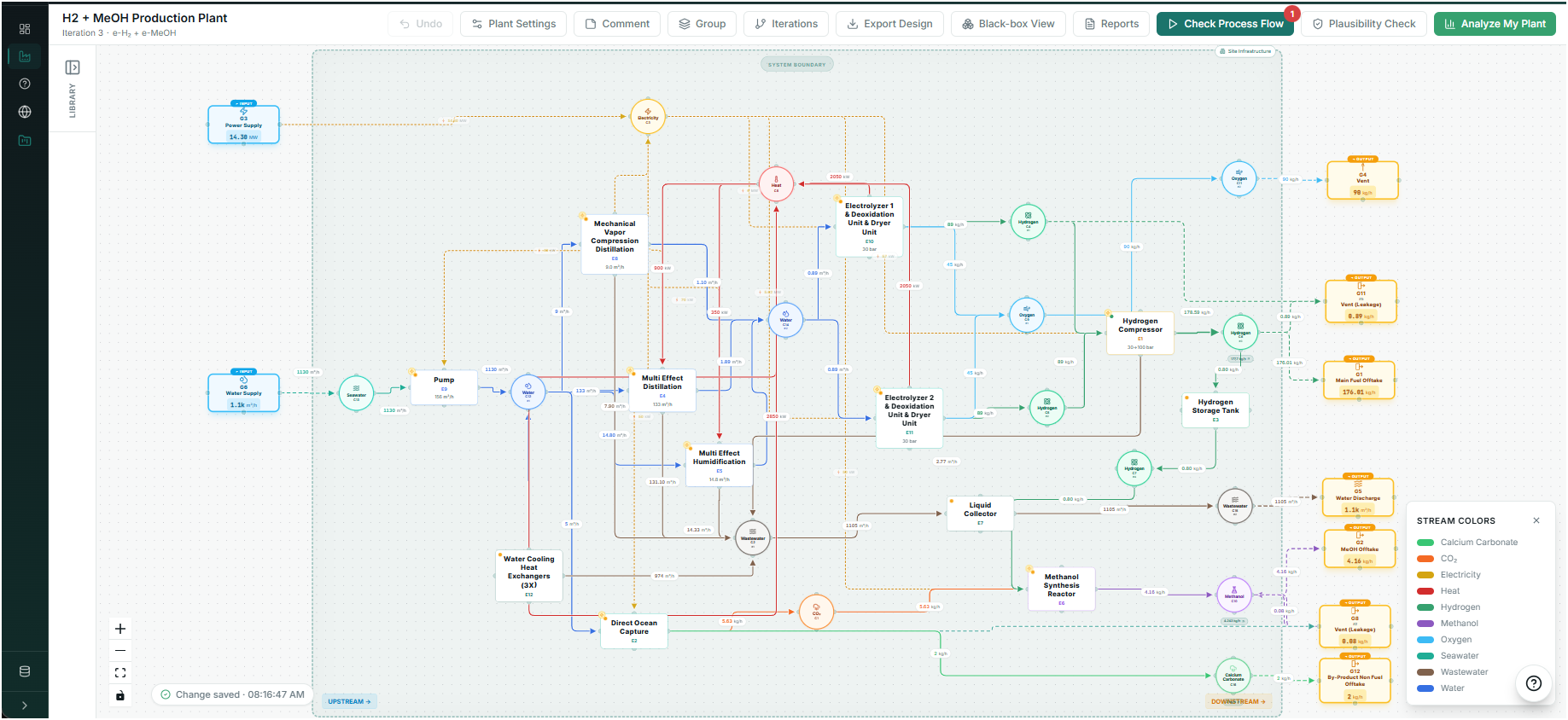
- Model the plant from feedstock in, through conversion units, to fuel out
- 46 production pathways and a library of equipment components
- Mass and energy balances resolved on the model itself
- CAPEX, OPEX and levelised cost of fuel built from the same components
- Carbon footprint and lifecycle impacts computed on the live model
- Scenario branching and versioning so assumptions stay traceable
Who uses it
Sustainable fuel project developers planning pre-FID plants: hydrogen, ammonia, methanol, kerosene and other low-carbon fuels.
Build, check, report
From plant concept to five reports in half a day
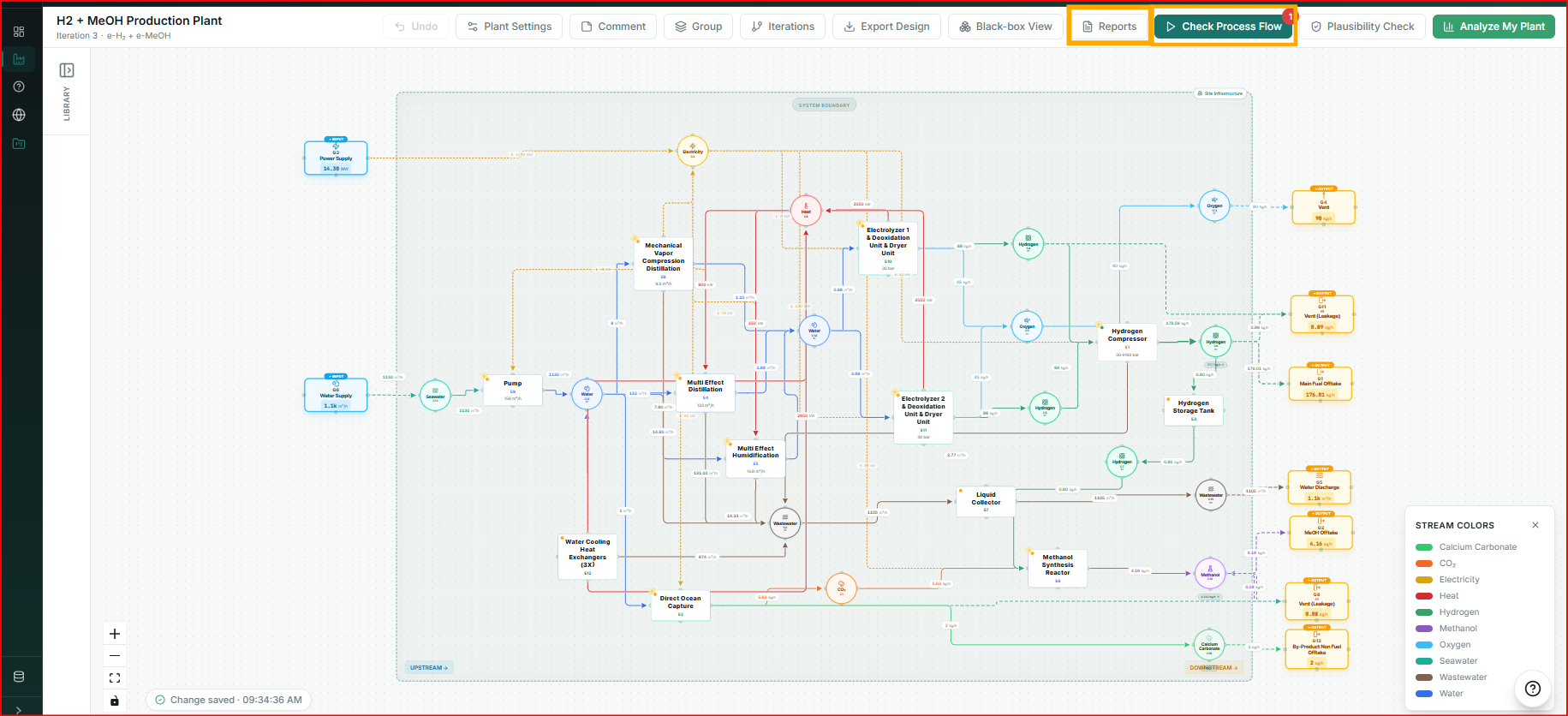
The developer designs the plant by linking components on a canvas. The component library handles innovative technology.
Every plant is validated by three sequential checks:
- 1.Syntax: structure complete.
- 2.Port and Carrier Compatibility: equipment input and output stream logic.
- 3.Mass and Energy Balances: equations satisfied within tolerance.
Licensed equipment are modelled as a black box: vendor units keep their data and cost without exposing their internal design.
A component not yet in the database can be added directly, named and typed, and the system infers its technical parameters (in development).
01
A concept plant takes shape on the canvas in 2 hours to half a day, with checks running on build.
02
Add the values and specs by filling the component templates.
03
Run the checks and generate the first five report outputs, exportable automatically.
Plant boundaries
The plant becomes a template
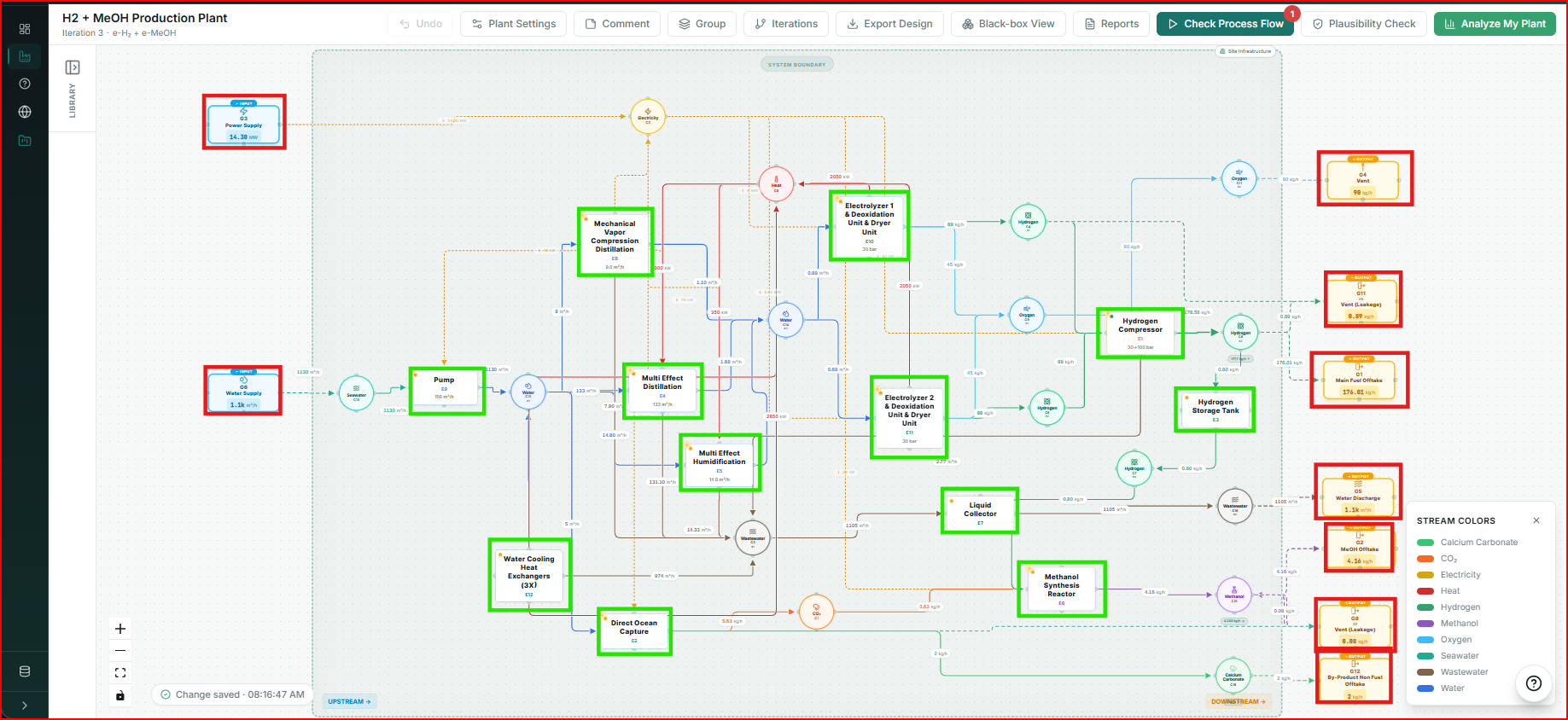
Every stream entering or leaving the plant passes through a gate. Gates describe where things come from and where they go, and carry upstream and downstream context.
9 import gate types on the supply side: power, water, CO2, air, fuel, heat, biomass, chemical, gas.
8 export gate types on the market and disposal side: fuel offtake, electricity offtake, CO2 offtake, heat offtake, commodity by-product offtake, water discharge, waste export, vent.
Each gate carries provenance, sustainability context and market destination, which feeds the lifecycle assessment, the levelised cost of fuel and the Proof of Sustainability.
Ontology layer
Agnostic by design
The component library is an agnostic ontological layer. Components are structured so every assessment module is built inside the simulation environment, which keeps the tool manufacturer-agnostic and regulation-agnostic.
The library covers 8 molecules (hydrogen, methane, methanol, ammonia, gasoline, diesel, kerosene, ethanol) across 46 production pathways.
Read the article: Augmented Digital Template, a continuous audit system for pre-operational projects →
Report suite
Five reports ready from one plant model
Reports regenerate when the model changes, so every document reflects the latest assumptions. They share one metadata set: revision, user, date, project, variation, document reference, status. Export is PDF today, with XLSX, CSV and HTML in development.
Report
Output
Status
Equipment, Gate and Carrier Inventory
What the plant is made of
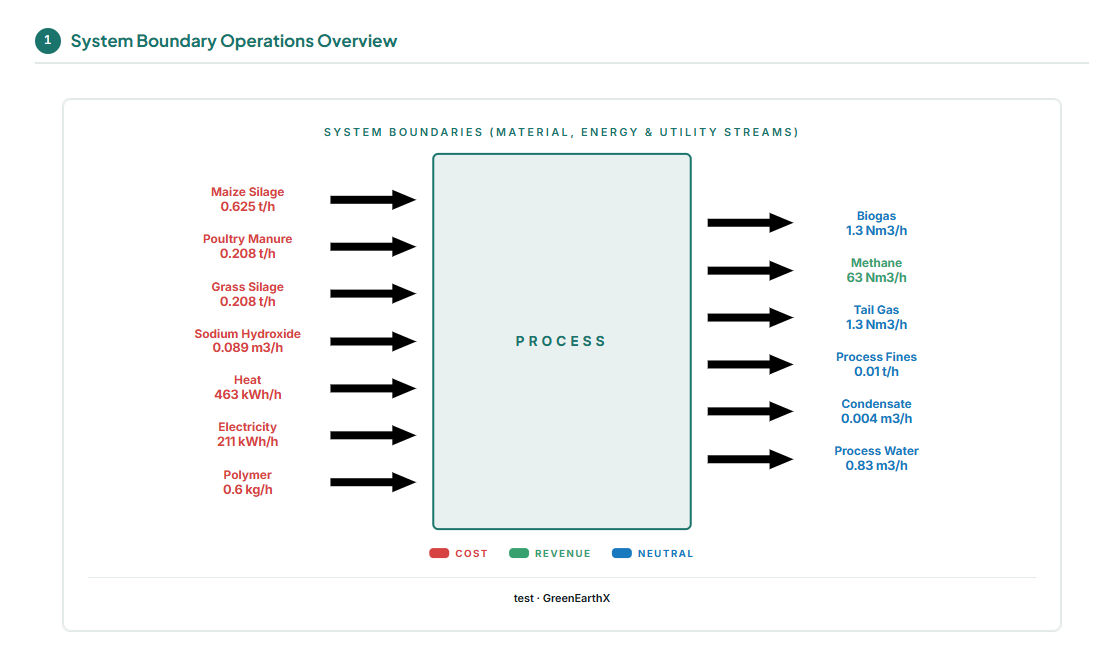
Process Flow Operations
Streams crossing the boundary, with economic value per stream: cost in red, revenue in green, neutral in blue
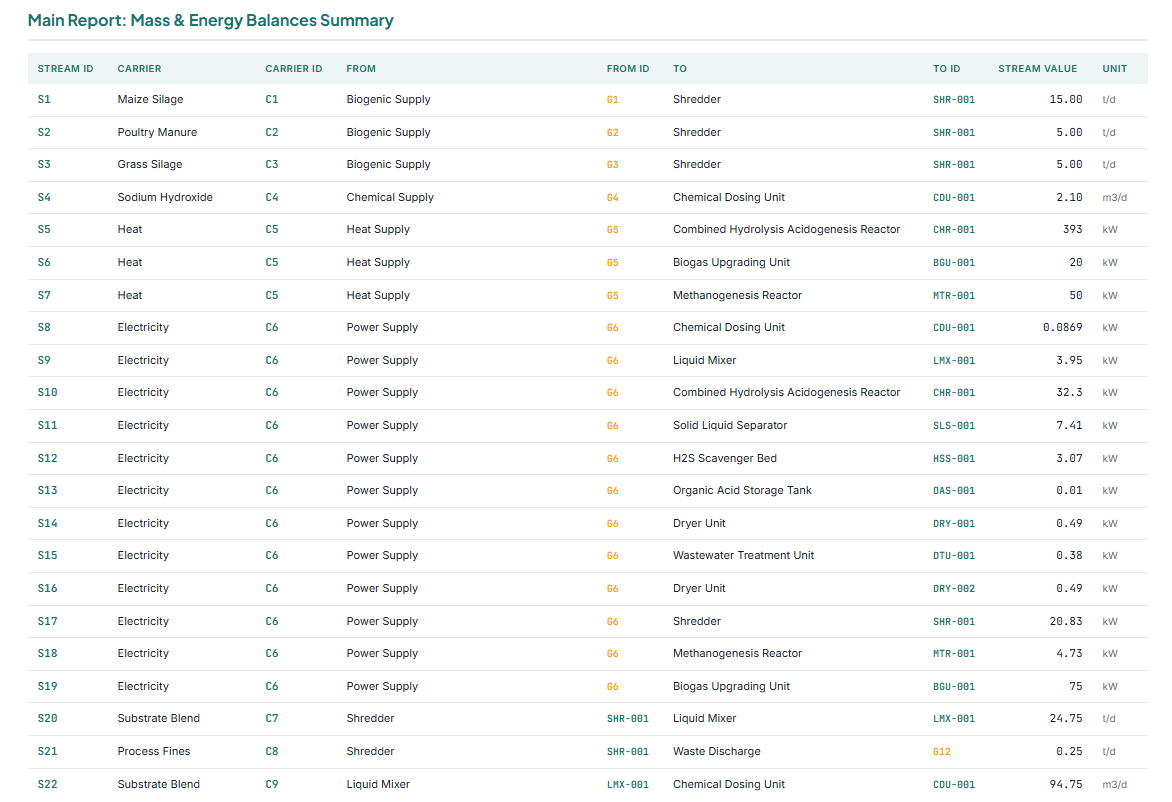
Mass and Energy Balances
Stream summary and energy duties for the whole plant
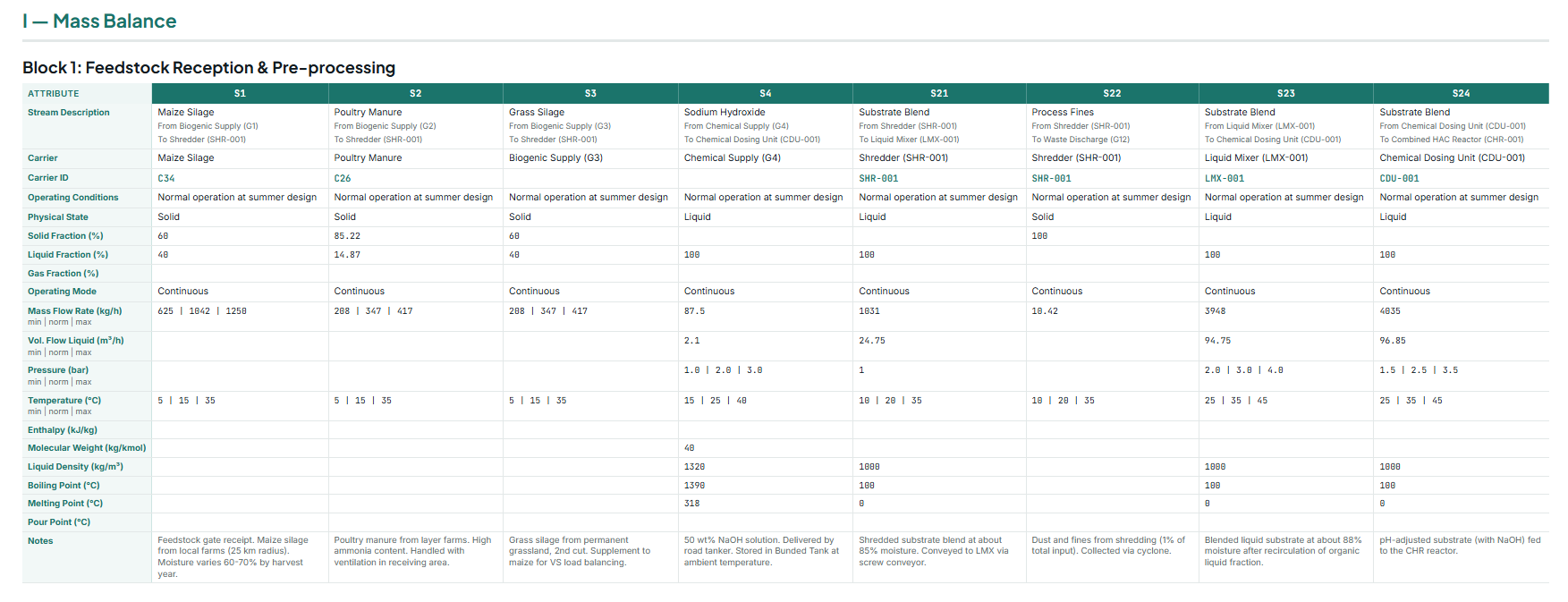
Stream Specification
Per-stream attributes by process block
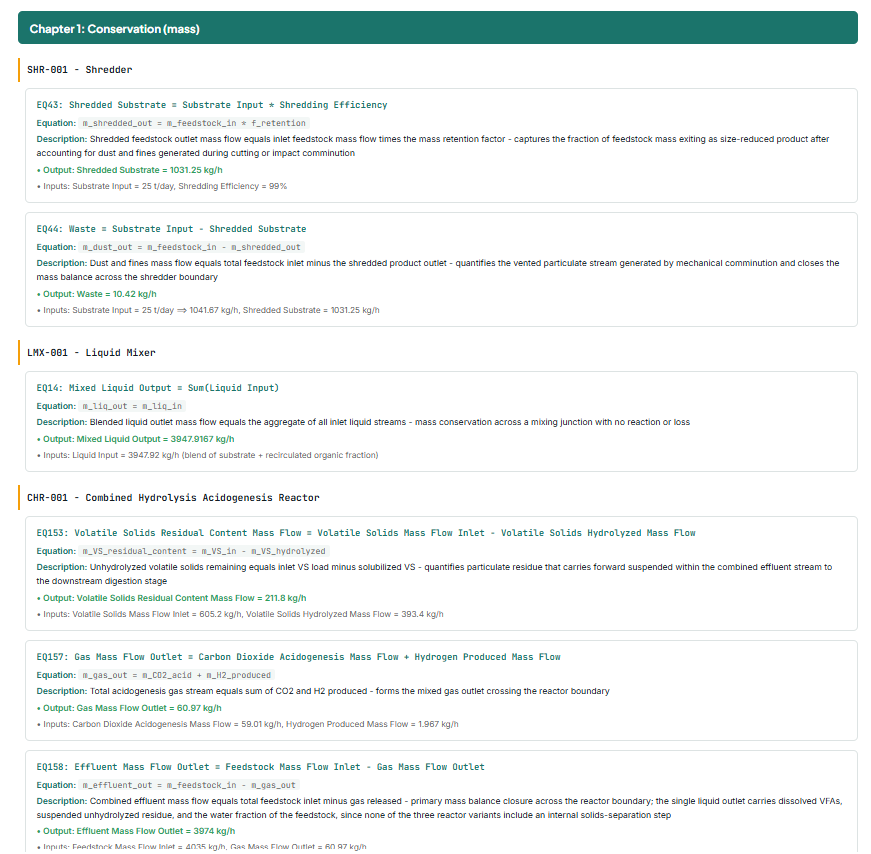
Equations per Equipment
The mass and energy equations behind the balances
Techno-Economic Assessment
Cost, revenue and levelised cost of fuel on the same plant data
Proof of Sustainability, Guarantee of Origin
Renewable Energy Directive III cross check, with Hedera Hashgraph
See the Hedera case study →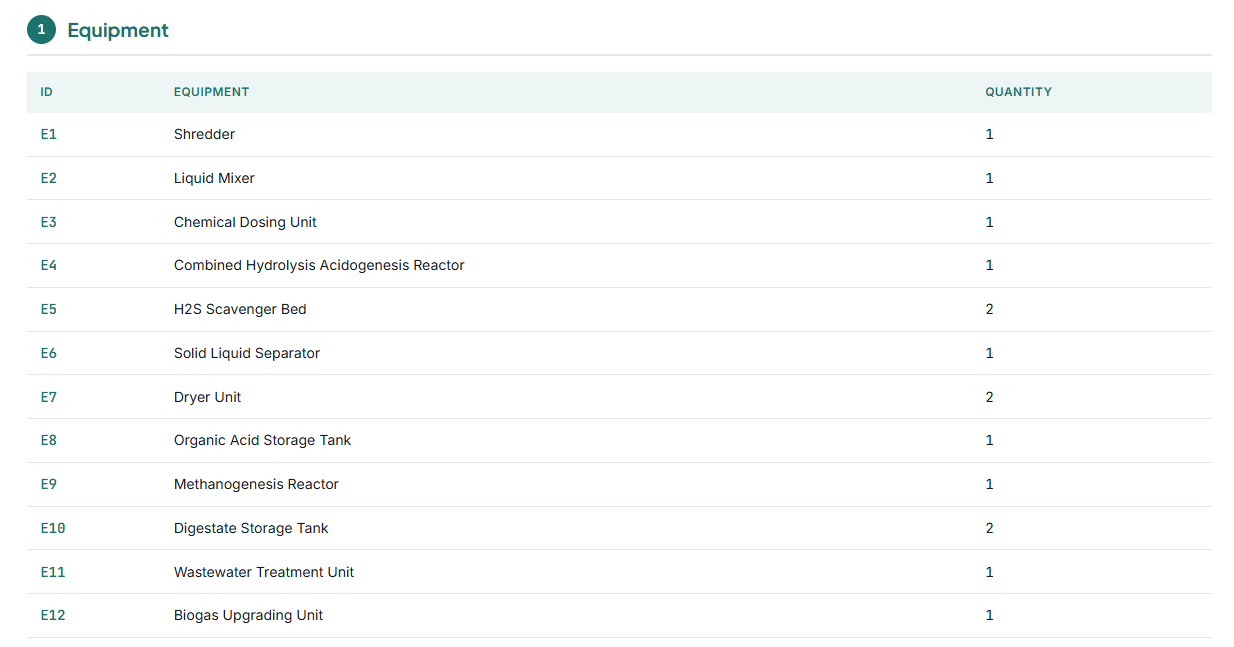
See it on your own project
See how GreenEarthX turns a plant concept into a bankable, verifiable case, in one working session.